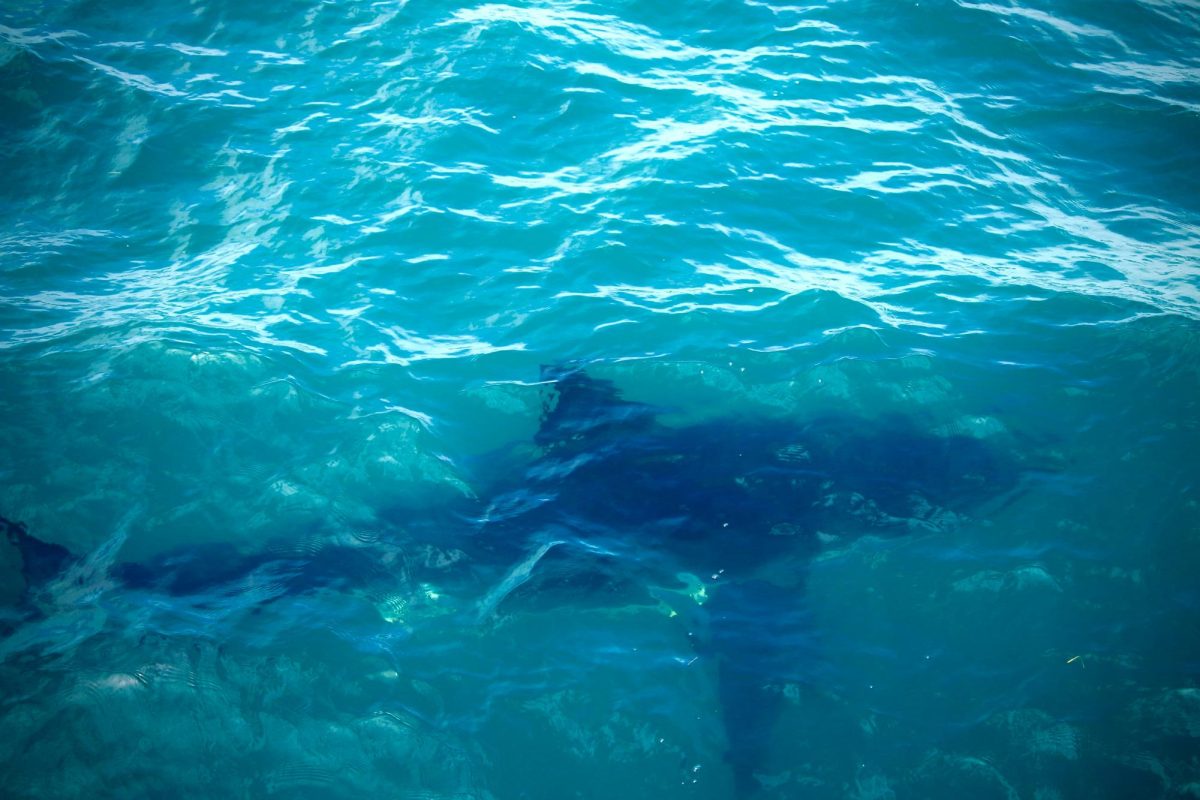
Every year, millions of sharks are finned whilst still alive – for a single bowl of soup. This brutal practice doesn’t only harm sharks; it also greatly harms their ecosystem. Conservationists have sparked a growing concern toward shark finning as well as young activists who warn that without action, the ocean’s balance could and will collapse.
Sharks play a critical role as apex predators and are main regulators of the food chain. “It leads to a tropic cascade which leads to a collapse in the marine ecosystem,” said Julia Marks, a worker at the Boston Aquarium. When sharks are forcefully removed from their home, populations of smaller fish explode, damaging coral reefs and other marine species. “A trophic cascade is when apex predators like sharks are taken from their role in the ecosystem,” said Marks, “which leads to a decrease in the trophic level… The removal of sharks harms other species by overpopulation of those other species”.
Students are also involved in and are actively speaking out about this issue. “From my knowledge, sharks don’t reproduce as quick as other animals so there will be less sharks which can lead to overpopulation of other fish.” said Sunlake freshman Jessie Yang. For her, the issue is both environmental and ethical: “It is very cruel and wasteful,” said Yang.
To combat shark finning, governments are using new technologies to detect illegal shark products and create marine sanctuaries. “Governments around the world are developing technology-driven solutions to better enforce fishing bans,” said Marks. Public education is also key to reducing finning demand. “If everyone knows the cruelty behind it, less people would do it,” said Yang.
The fight for sharks to have basic rights is far from over, but with awareness, activism and innovation, there is hope that the ocean’s top predator – and the ecosystem it protects – can still survive.